
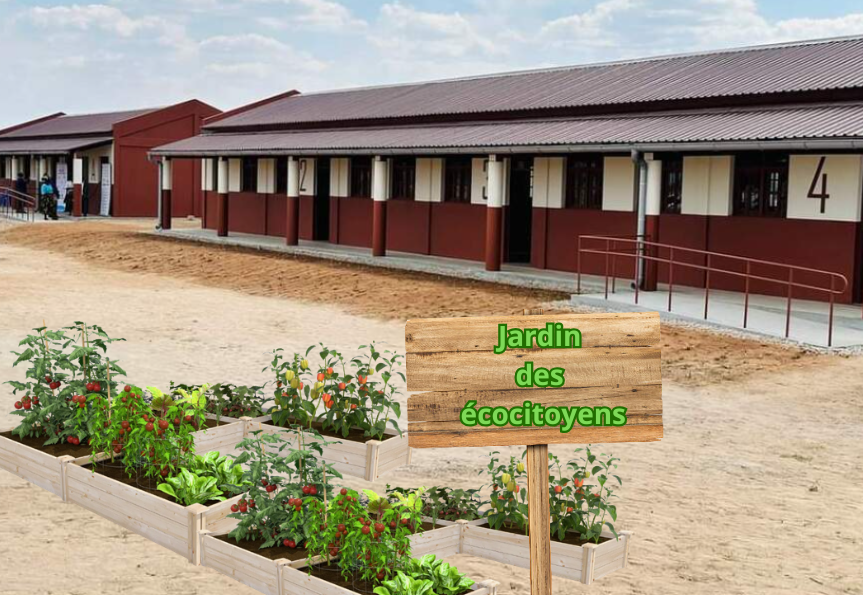
Image 1: Caption: School incorporating an educational garden in Africa
Introduction
Faced with global environmental challenges—climate change, soil degradation, pollution, loss of biodiversity—education appears to be one of the most powerful tools for building a sustainable future. In this context, eco-citizenship is emerging as an essential educational approach, particularly in Africa, where environmental issues are closely linked to social, economic, and cultural realities.
But what exactly is eco-citizenship, and why is it so important in African educational settings?
Understanding eco-citizenship
Eco-citizenship refers to all the responsible attitudes, values, and behaviors that an individual adopts to preserve the environment and contribute to collective well-being. It is based on three fundamental dimensions:
- Environmental awareness
- Individual and collective responsibility
- Concrete action every day
Being an eco-citizen doesn't just mean being aware of environmental issues, but also taking action to solve them, even on a small scale.
Why eco-citizenship is crucial in Africa
In many African regions, communities are directly experiencing the effects of environmental change: soil erosion, water scarcity, deforestation, and difficult waste management. In this context, education in eco-citizenship is becoming a strategic tool for:
- Strengthening community resilience
- Promoting sustainable practices adapted to local realities
- Educating a conscious and responsible generation
- Encouraging civic participation from an early age
Investing in environmental education means investing in long-term social, economic, and ecological stability.
The central role of school
School is an ideal place to develop eco-citizenship, as it is a place of learning, socialization, and experimentation. When it incorporates practical activities such as an educational garden, cleanliness routines, or an environmental club, it transforms students into agents of change.
These initiatives enable children to:
- Understanding natural cycles
- Developing a sense of responsibility
- Learning cooperation
- Linking theory and practice
Learning then becomes lively, participatory, and meaningful.
The importance of practical projects
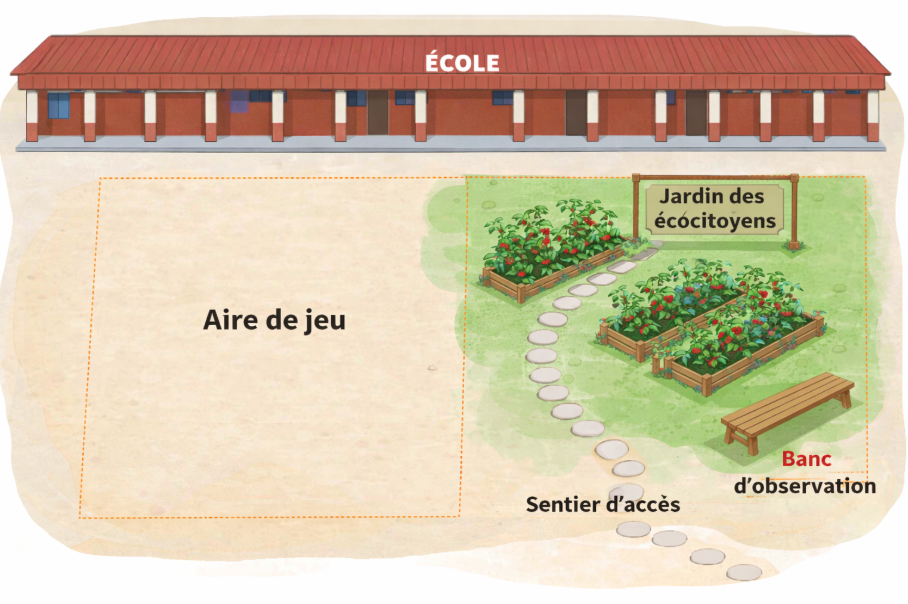
Image 2: Caption: Layout plan for a schoolyard with an educational garden
The diagram above illustrates how a school space can be transformed into a concrete ecological learning environment. The most effective eco-citizen projects are those that enable students to take concrete action. For example:
- Cultivating a school garden
- Sorting waste
- Maintain their immediate environment
- Raise awareness among those around them
These experiences develop essential skills: independence, leadership, critical thinking, and community engagement. They show students that they can be positive agents of change, regardless of their age.
Educating citizens, not just students
Education in eco-citizenship goes beyond the academic setting. It aims to train individuals to think, collaborate, and act for the common good. By integrating these values from school onwards, we are preparing citizens who are aware of their role in society and capable of actively contributing to a sustainable future.
This educational approach is particularly powerful because it creates a multiplier effect: an informed student can influence their family, neighborhood, and community.
Towards a sustainable future
Eco-citizenship is not an additional school subject. It is an educational philosophy, a way of learning and living together. It is based on the simple but essential idea that every action counts, and that change often begins with small local actions.
By encouraging environmental education initiatives, we are laying the foundations for a more balanced, responsible, and united future.
Conclusion
Promoting eco-citizenship means sowing seeds of hope. It means believing that education can transform mindsets, strengthen communities, and protect the planet. In a world facing growing environmental challenges, educating eco-citizens is no longer an option: it is a necessity.
This article is part of preparations for a mission to support education in eco-citizenship in schools in West Africa..
📚 References
Minichiello, F. (2015). Développement durable et école : sélection d’outils
Sauvé, L. (2007). L’éducation relative à l’environnement et la globalisation : enjeux curriculaires et pédagogiques
UNESCO. (2017). Éducation à la citoyenneté mondiale : thèmes et objectifs d’apprentissage.
UNESCO. (2020). Éducation au développement durable : feuille de route.